The Captain’s Armband Before the Modern Match
The captain’s armband makes leadership visible on the field. Learn what its symbol can do, what it cannot do, and how teams can choose who wears it.
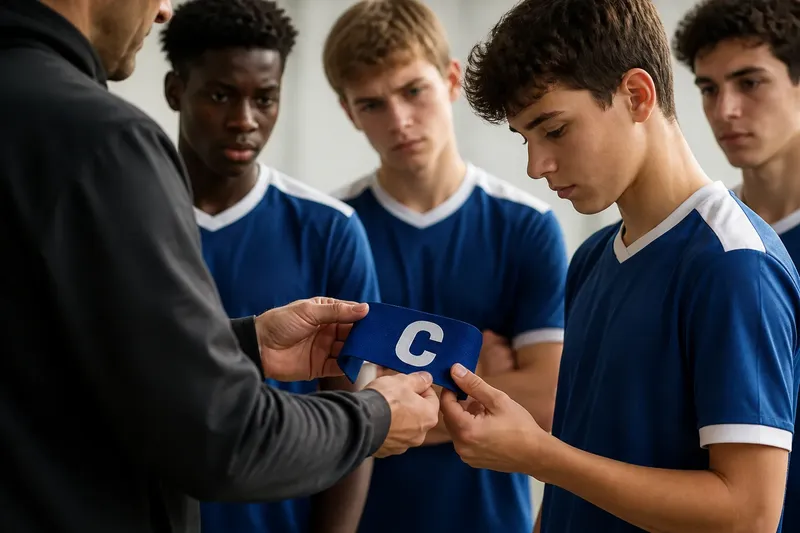
Before kickoff, a coach hands one player a band of fabric and the rest of the team looks on. The captain’s armband is a small, visible sign, but it asks a bigger question: how can leadership be recognized during a match without pretending one person carries the whole team?
The armband’s value lies in making a role legible. Teammates, opponents and officials can quickly identify who has been named captain. That clarity is useful, but it does not turn symbolic authority into control over every decision, relationship or responsibility on the field.
Why make a captain visible?
Teams need ways to identify a representative in the flow of play. A captain’s band offers a simple visual cue, especially when players are spread across a field and cannot easily hear a coach. It marks a player selected to speak for the side in specific situations and to embody a shared role.
That public signal also affects how a team understands its own structure. Naming a captain tells players that representation matters. The choice may reflect trust, communication skills, experience or a coach’s view of the team’s needs. It does not automatically mean the chosen player is the strongest athlete or the only person capable of leading.
The distinction matters because a symbol can be mistaken for a complete job description. A captain may represent teammates to an official, help keep communication clear and model conduct. But tactical choices, emotional support, preparation and peer accountability do not suddenly belong to that player alone.
What can the armband actually authorize?
The band signals selection; the rules of a sport determine what formal privileges or duties accompany that selection. In some settings, a captain may have a defined role in communication with officials. In others, the role may be mostly ceremonial or shaped by local team practice.
Teams should name the responsibilities they expect rather than assume the band explains them. A useful role description might say that the captain relays a concern calmly, helps teammates hear a coach’s instruction and represents the group during a pregame exchange. It should also clarify what the captain does not decide, such as substitutions or disciplinary matters reserved for the coach or officials.
Where a rule, equipment specification or league policy governs captain identification, follow that guidance. Beyond those formal requirements, the team can decide how much meaning to attach to the role and how to share the work around it.
Should one person lead, or should leadership be shared?
A single captain, a small leadership group and a rotating captaincy are three common approaches. Each makes leadership visible in a different way. The right choice depends on the team’s size, experience, communication needs and the purpose of naming a captain.
When does a single captain suit a team?
A single captain suits a group that needs one clear representative and has a player trusted to communicate across different roles. The approach is easy for teammates and officials to understand, but coaches should make clear that it does not make that player responsible for every team problem.
When is a leadership group more useful?
A leadership group can suit a team with varied experience or distinct on-field units that need different voices. The group can divide tasks, such as welcoming new players, relaying concerns or helping teammates stay organized, while one designated captain remains the visible representative when a single contact is needed.
What does a rotating captaincy teach?
Rotation can suit a developing team that wants more players to practice representing others. It can make the role feel accessible, but the coach should explain the duties before each change so that rotation does not leave teammates unsure whom to approach.
How should a team choose among these approaches?
Start with the team’s actual need: a clear point of contact, a broader range of voices or a chance for more players to learn the role. Then name the captain’s authority and boundaries out loud, and revisit the arrangement if teammates remain confused about who handles what.
How can a team keep the symbol from becoming the whole job?
Separate visible representation from everyday responsibilities. A captain might speak to an official when appropriate, while coaches remain responsible for instruction and teammates continue to support one another. Players can also take informal leadership through clear calls, steady effort or helping a teammate understand a task, whether or not they wear the band.
Imagine a youth soccer team where its captain is the only player expected to speak up when teammates are uncertain. The coach could instead explain that the captain will relay questions during a stoppage, while players can give one another brief positional reminders during play. The observable result should be that teammates know where to direct a formal concern without waiting for the captain to manage every exchange.
That division protects the captain from being treated as a substitute coach and gives the rest of the team meaningful agency. It also lets coaches evaluate the role by observable conduct: Is communication respectful? Does the captain represent teammates accurately? Do players understand which decisions belong elsewhere?
How should coaches explain the choice?
Make the selection process understandable without turning it into a popularity contest. A coach can identify the needs of the role, invite players to discuss what good representation looks like, and explain who makes the final appointment. If teammates have input, say how that input will be used.
When naming a captain, connect the choice to specific behaviors rather than broad claims about status. For example, explain that the player communicates clearly in tense moments or listens carefully to teammates. Avoid presenting the band as a reward for being the best player; that framing can suggest that skill and leadership are interchangeable.
Revisit the arrangement at a sensible point in the season or when the team’s circumstances change. A captaincy need not be permanent to be meaningful. If a player’s role changes, a direct conversation can preserve dignity while making the team’s current needs clear.
What should players expect from a captain?
Expect representation, not rescue. A captain can help make the team’s voice visible and support clear communication, but cannot settle every disagreement, control every teammate or replace the coach’s responsibilities. Teammates still owe one another attention, respect and honest communication.
For a team deciding how to use the captain’s armband, the practical question is not simply who deserves to wear it. Ask what the symbol needs to clarify, who should carry each related responsibility and how everyone will know the difference. A clear answer lets the band remain useful: a sign of representation that points toward shared work, rather than a claim that leadership belongs to one person.